
Kato Zenji’s Porcelain Tribute to Kawanabe Kyosai
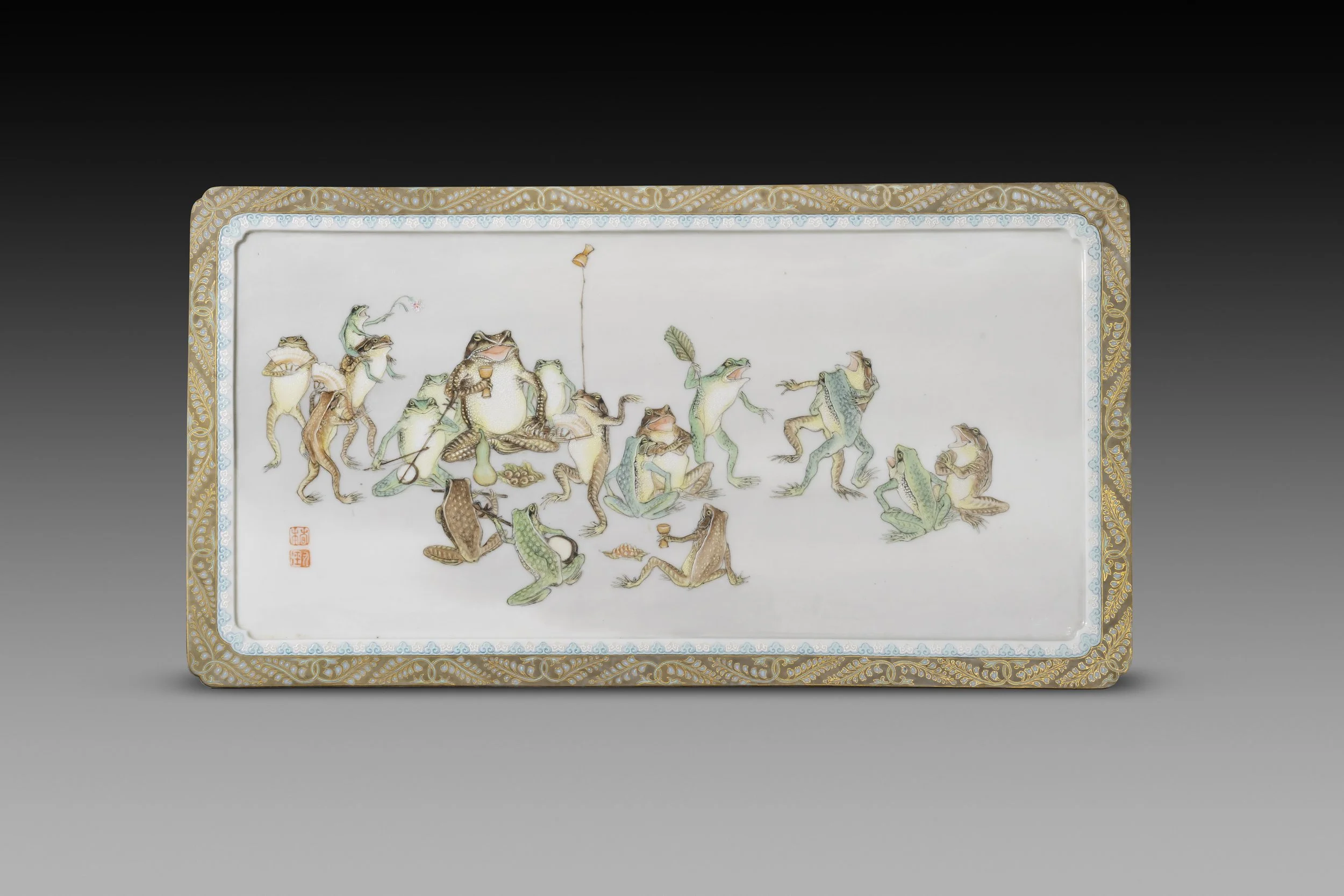
This porcelain panel by Kato Zenji III, created around 1895, depicts a cheerful scene of frogs banqueting, drinking, dancing and playing instruments including the shamisen. Measuring 24.5cm in height and 45.5cm in width, the piece features polychrome enamelled decoration, with the frame adorned with an inner border of ruyi heads and an outer border of stylized paulownia. The reverse bears two red artist seals and an impressed kanji seal for Kato Zenji.
Kato Zenji III (1848-1918) came from a family that had worked in Seto for over five generations, and he became the most renowned member of his lineage with his highly realistic pictorial depictions and exceptional craftsmanship, representing fine examples of Japanese ceramic art of the Meiji period.
Seto, located in what is now Aichi Prefecture, provided ideal conditions for ceramic production. The region became recognized as one of the Nihon Rokkoyo (the six old kilns of medieval Japan) during the Kamakura period (1158-1333) and it stood out as the only area among the six to glaze its pottery. Ceramic production in Seto dates back to the Kofun period (about 260-590 A.D.), building on centuries of accumulated knowledge and expertise. The location itself made Seto particularly suitable for pottery making. The surrounding soil contains high-quality porcelain clay and silica, while nearby forests provided firewood for fuel. These natural advantages, combined with generations of skill, created the foundation for works like this porcelain panel.
Kato Zenji III was commissioned to create decorated plaques for the Imura Hikojiro workshop of Yokohama. Originally an oil merchant, Imura Hikojiro established his ceramics business in Yokohama around 1878, focusing on ceramics aimed at the export market. His enterprise grew substantially, eventually operating four factories with more than thirty ceramic-painters and over 200 workers. The workshop's location at 22 Honcho Dori in Yokohama positioned it well to serve the international market that had developed following Japan's opening to the West.
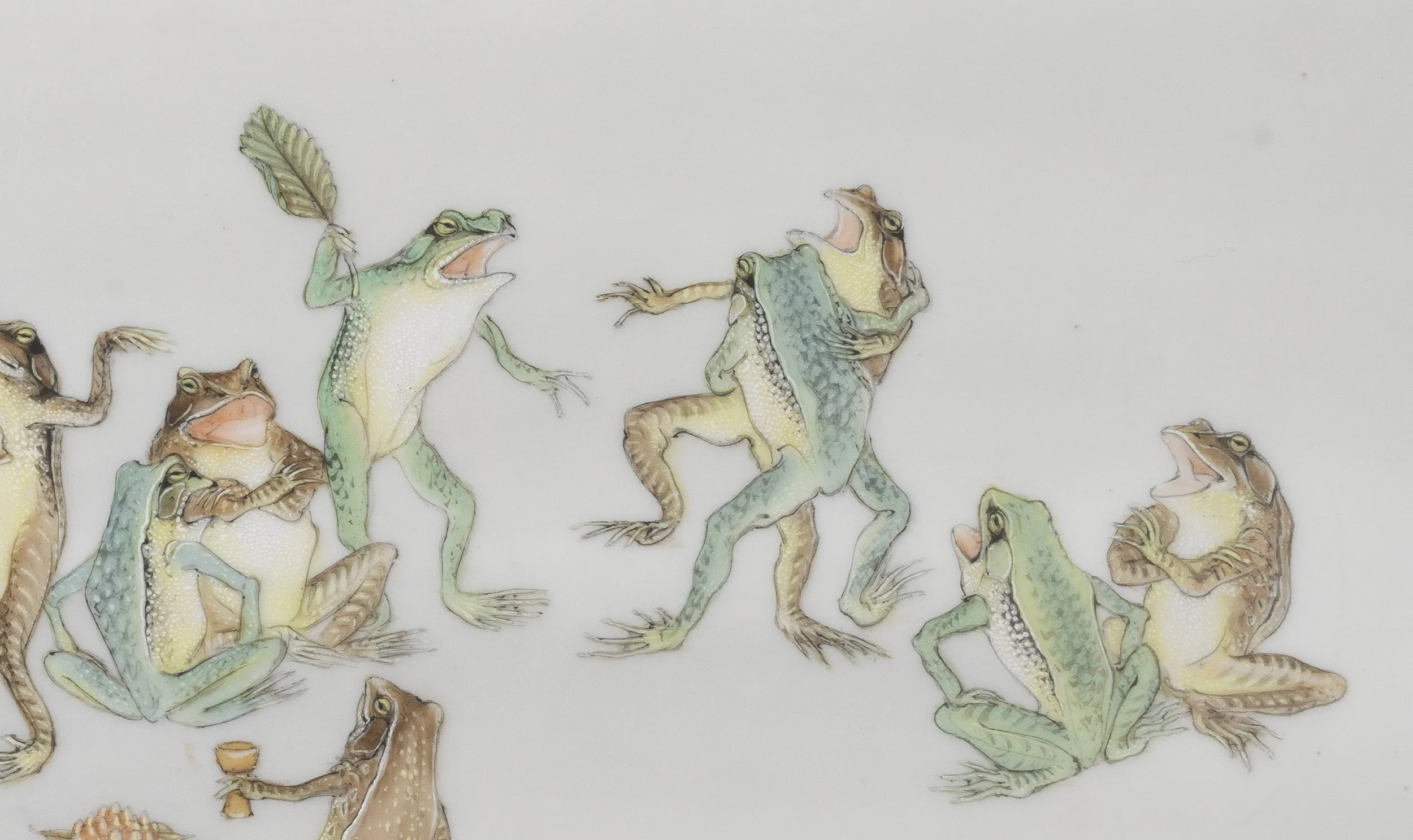
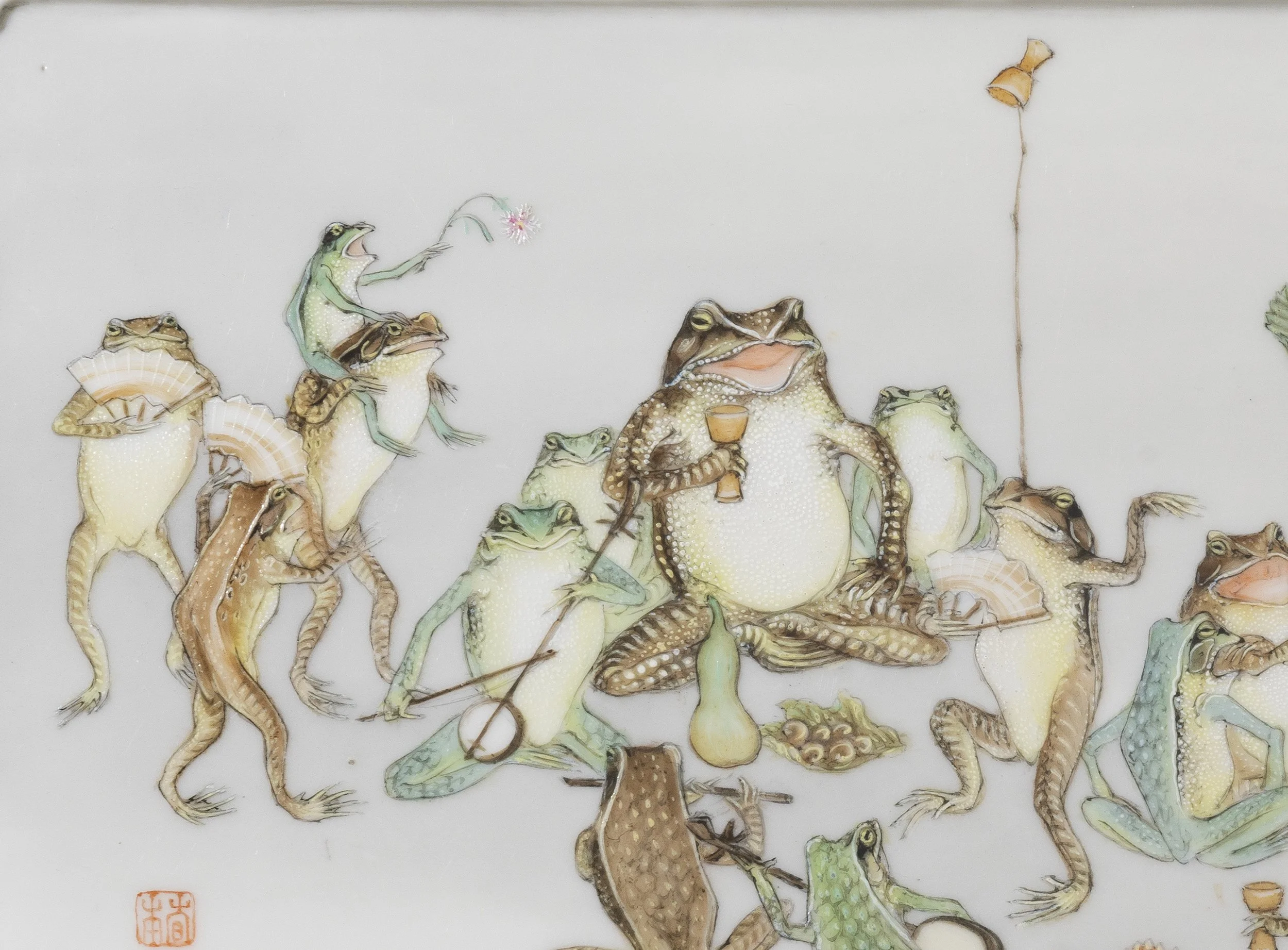
The design of this panel draws inspiration from Kawanabe Kyosai (1831-1889), one of Japan's most accomplished and unconventional artists. Kyosai was known for his technical skill and satirical humor, working across multiple artistic disciplines from Buddhist paintings to playful sketches. His depictions of animals, very often frogs, were infused with personality and often served as witty commentary on human society. Frogs appeared frequently in Kyosai's work, shown in various anthropomorphic activities that mirrored human behavior with satirical edge.
Kyosai studied under the traditional Kano school but developed his own distinctive approach that combined disciplined technique with spontaneous energy. His frog paintings have become iconic examples of his ability to blend humor with masterful execution.
This porcelain panel demonstrates the artistic collaboration and technical achievement of the Meiji period, capturing Kyosai's playful vision through Kato Zenji III's skilled enamelling. As you watch these frogs come to life in our accompanying animated video, you can appreciate the craftsmanship that brought them into being.