SOLD
Fine Silk Embroidery of Doves
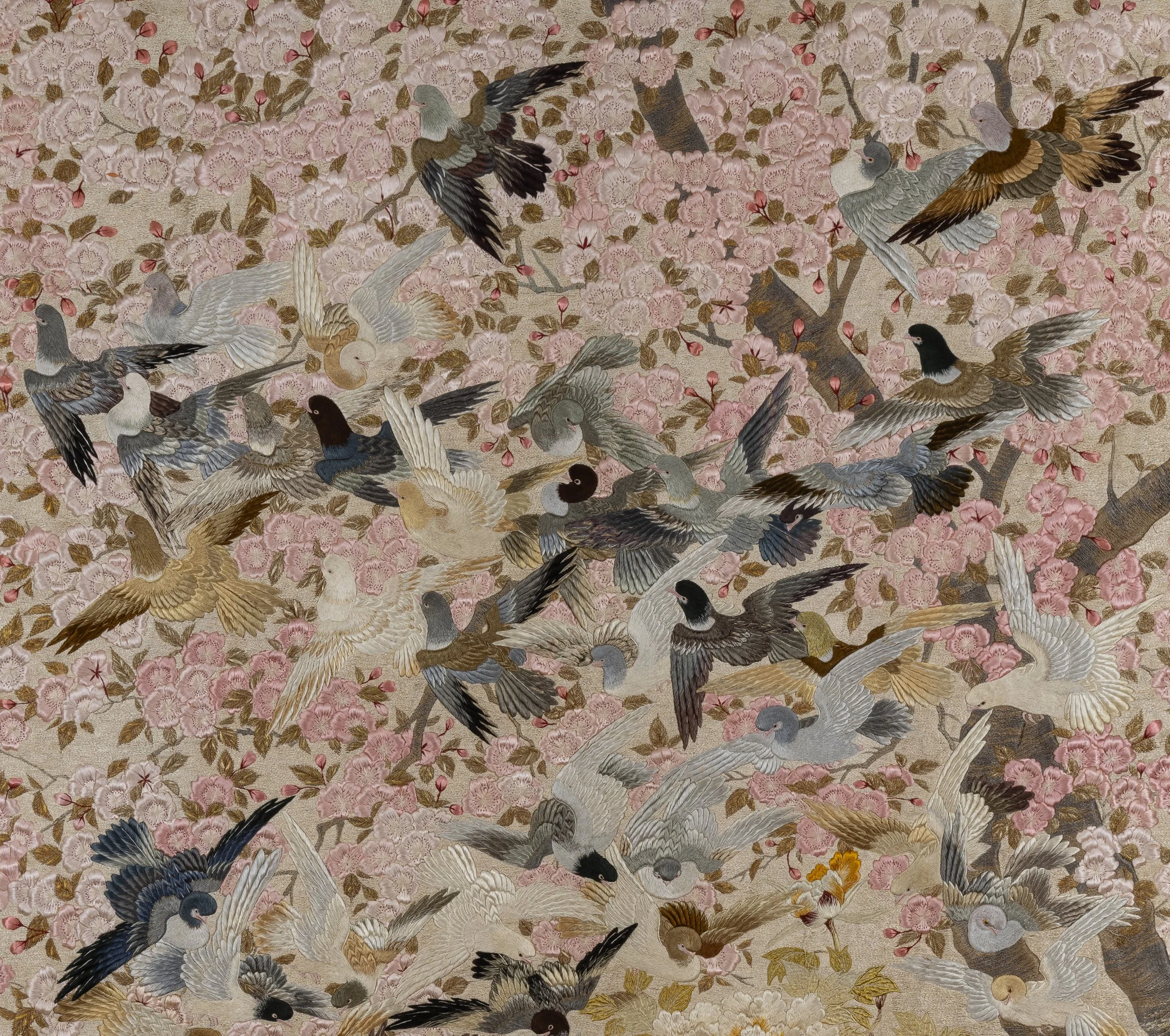
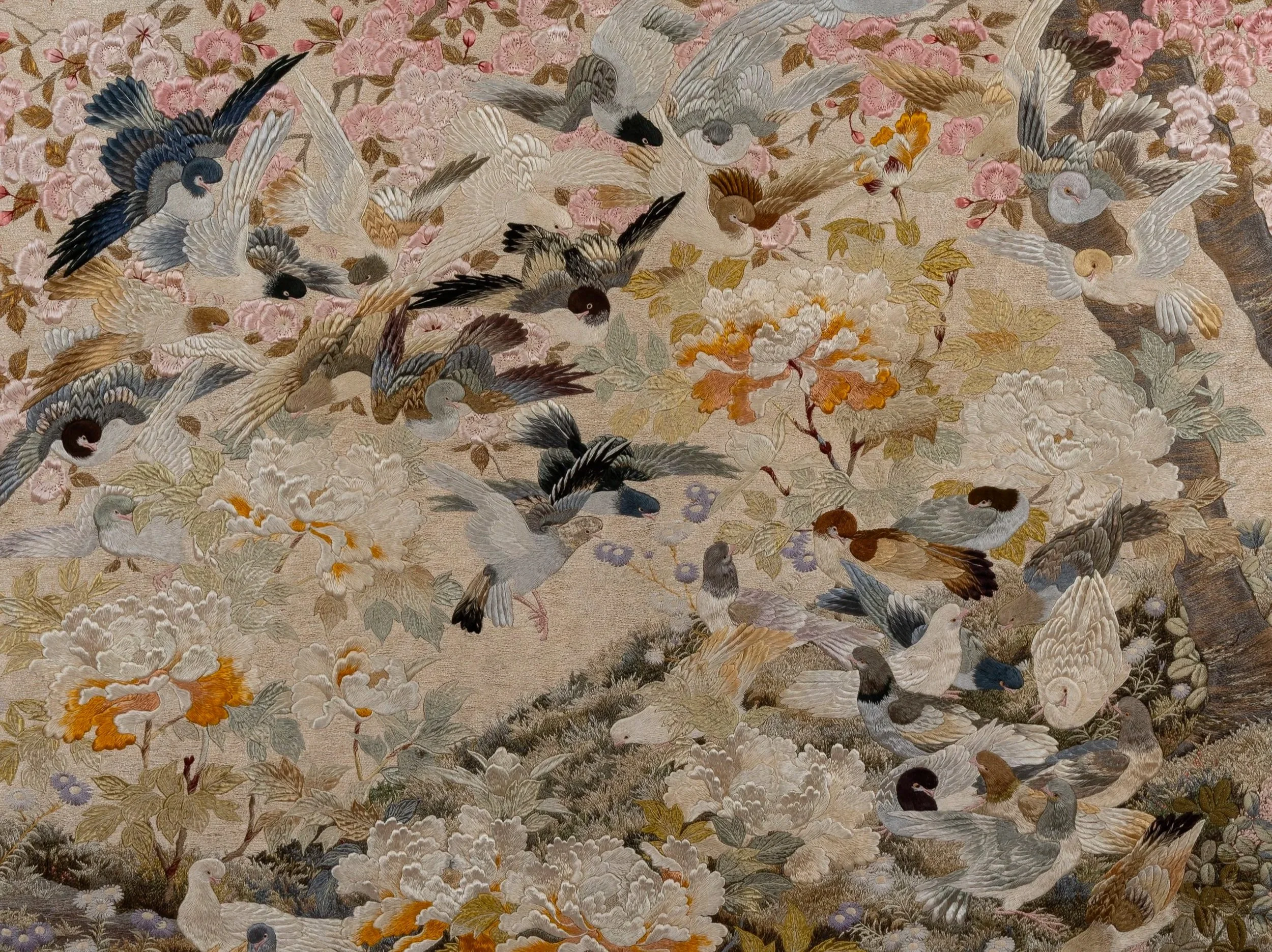
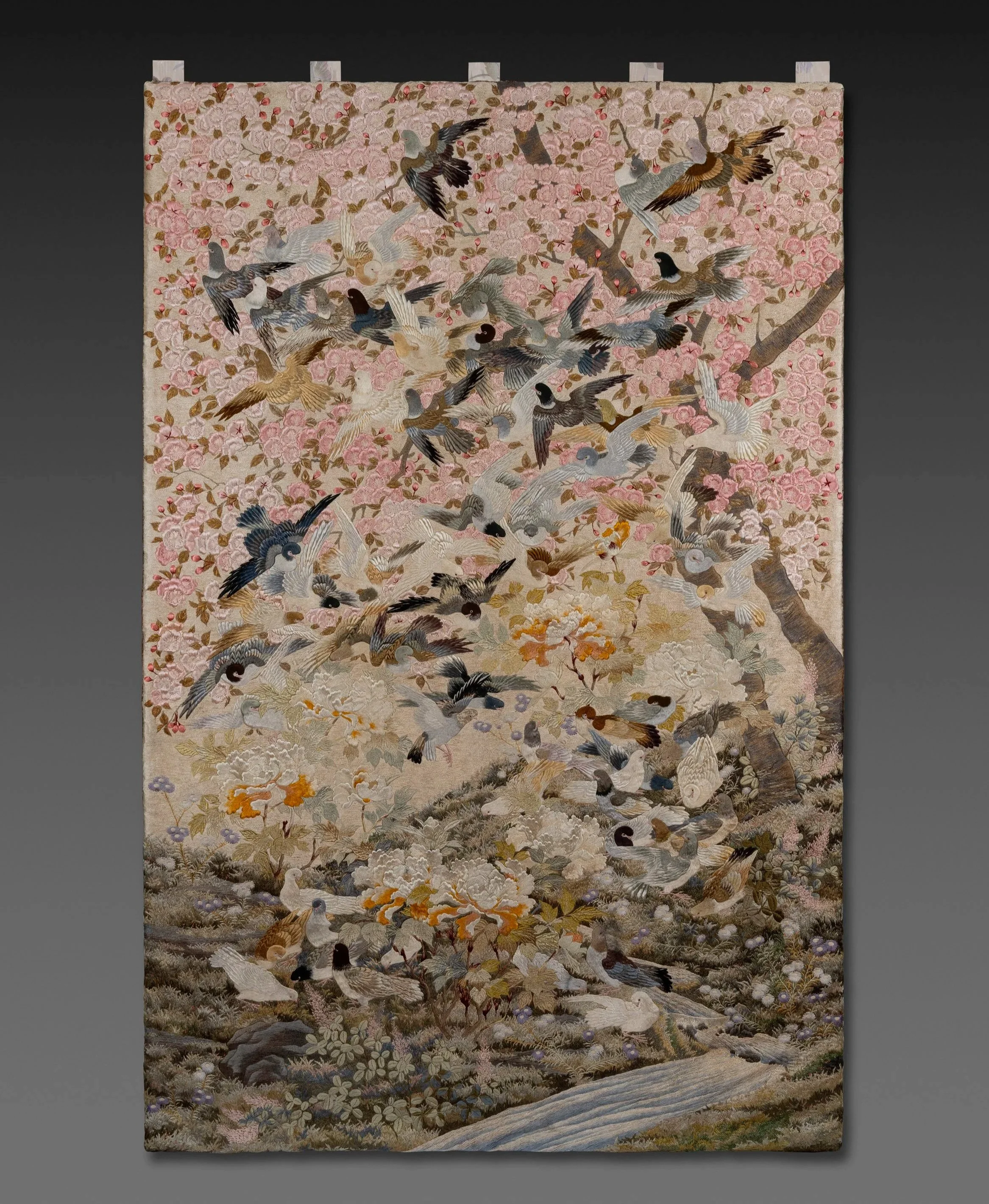
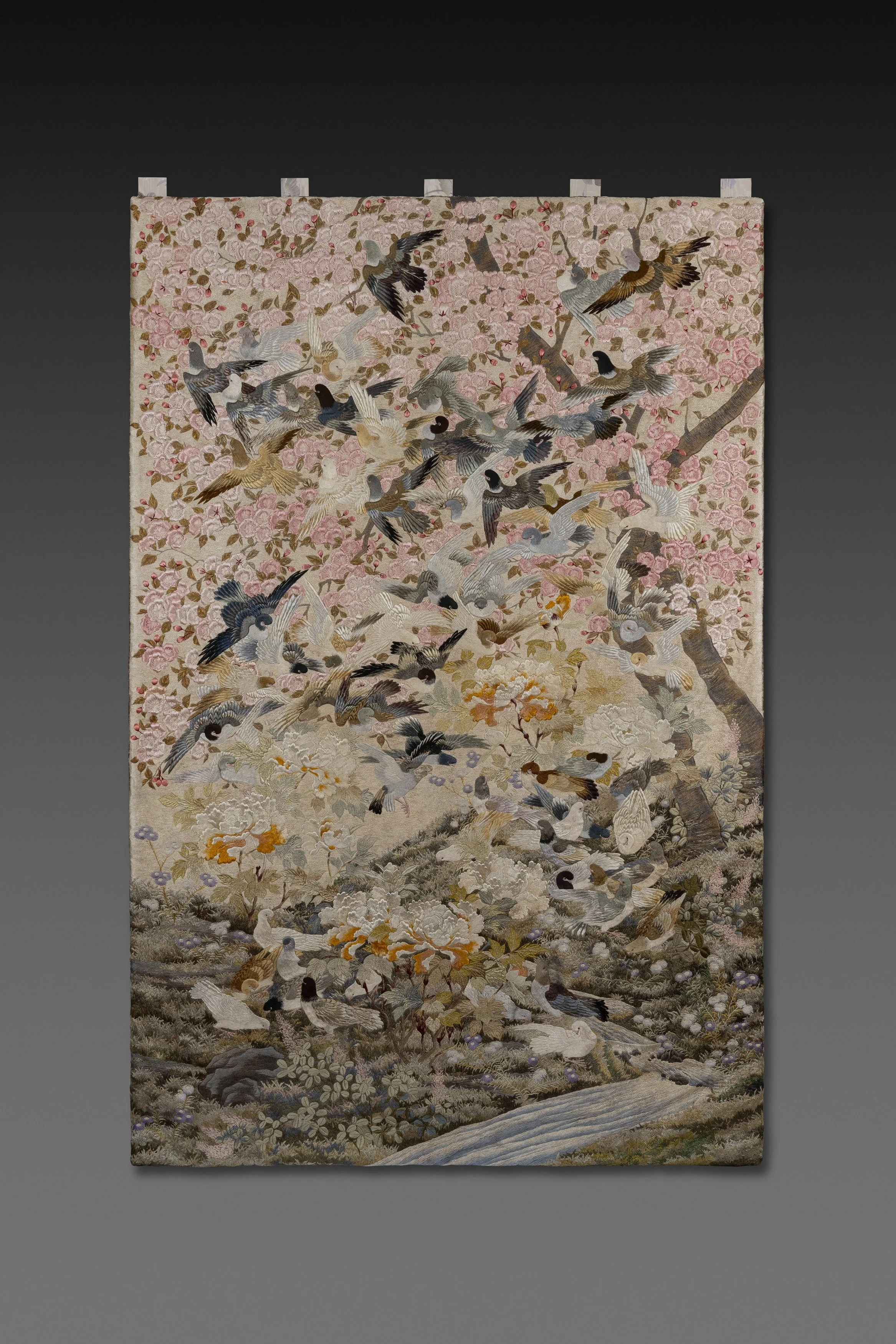
A fine embroidered silk hanging delicately worked depicting a profusion of doves and pigeons in flight amongst dense clusters of cherry blossom, with some at rest on a riverbank amongst peonies and grasses, the silks in vibrant colours worked in appliquéd padded floss silk embroidery, with plied cotton and silk threads on a padded satin stitch ground
(In very fine condition with no colour loss)
Height: 213.4cm, width: 114.8cm
Meiji period, circa 1890
The bombyx mori silk moth caterpillar makes it’s cocoon out of one single, very long, filament of silk, glued together with a natural gum called sericin. These filaments are boiled to remove some of the sericin so that the silk can be reeled off. One continuous filament of 1,000-1,500 meters long can be reeled off one silk moth cocoon. Each filament, called cocoon thread (mayu-ito or kenshi), is about 2 or 3 denier. Several filaments are reeled together to make a single strand of raw silk (ki-ito), of an average thinness of 21 denier.
The raw silk is soaked to remove more sericin. After this process, the silk thread becomes whiter, softer and more lustrous. The strands of degummed thread are called suga-ito.